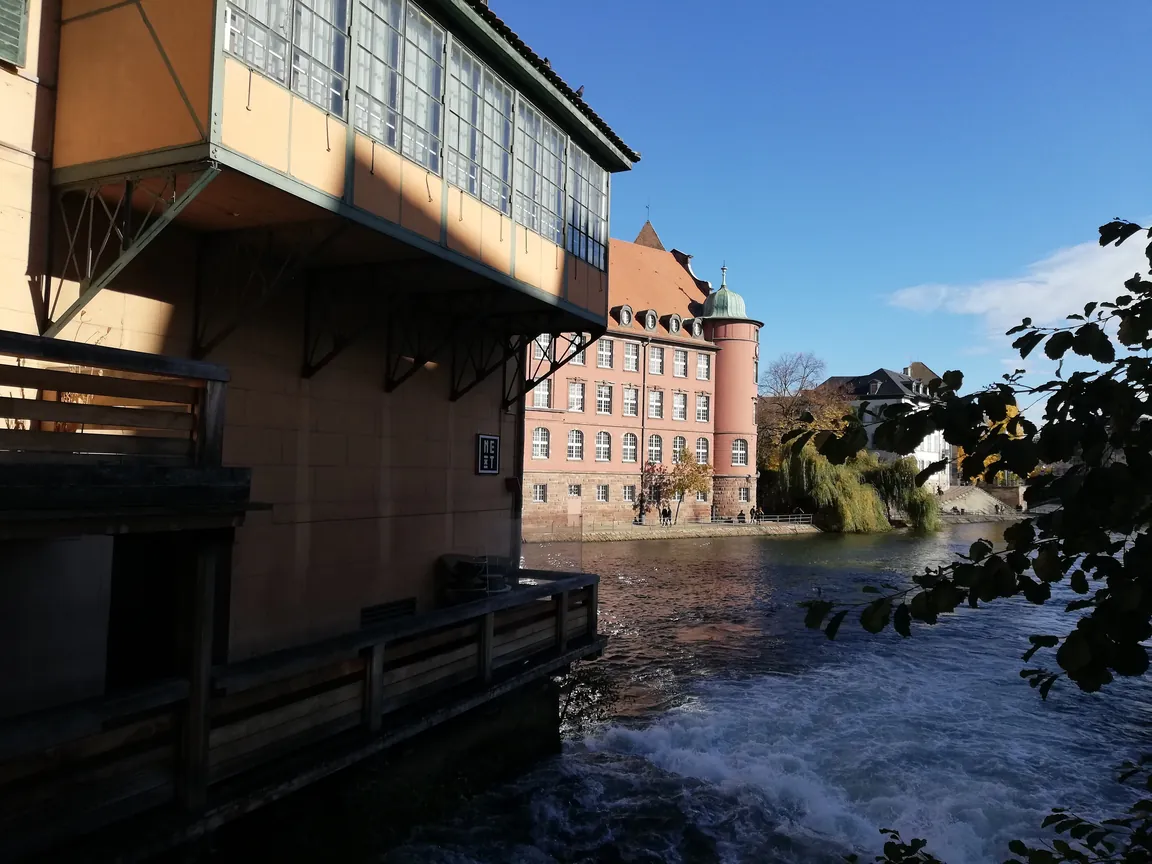
The main thing people rarely mention: Strasbourg is small. In 1988 the Grande Île, the island ringed by the River Ill, became the first historic city centre in France to be added to the UNESCO World Heritage List in its entirety. You can cross it on foot in 15–20 minutes. Yet Strasbourg is loved not for its size but for its history, which turns up at every step. On a single walk, you'll pass medieval half-timbered houses, a French cardinal's palace, a former ministry of the German Empire and a European institution, and almost nowhere is there a sign explaining any of it.
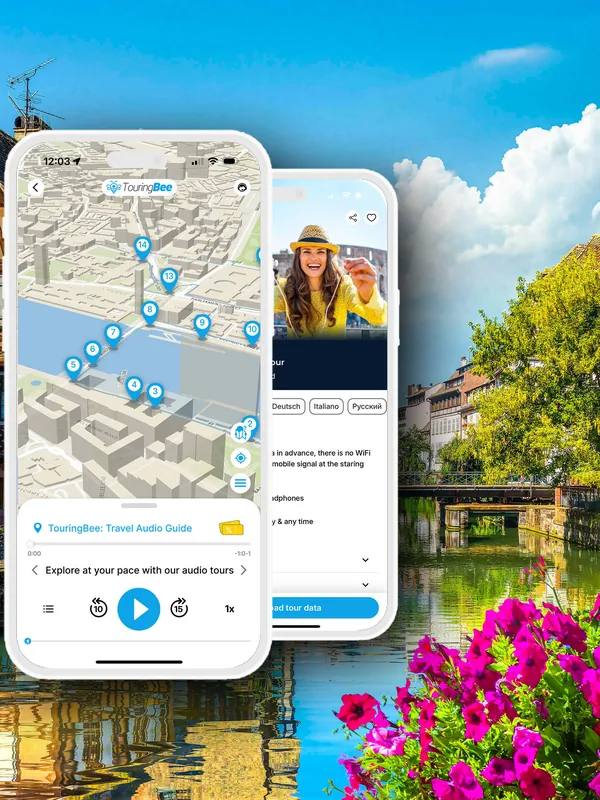
Strasbourg Self-Guided Audio Tour Instant access
The explanations the signs leave out can come with you: the TouringBee audio tour leads you around the island and tells you what lies behind the façades. In one day Strasbourg manages to surprise you, and in two it opens up far more fully. There are a few drawbacks worth knowing before you go, though. Tickets for the astronomical clock show and the cathedral viewing platform are only available on the day of your visit. The historic centre gets very crowded in December, and sunshine is never guaranteed. It's worth knowing these things in advance so they don't take you by surprise.
At a glance
| Key facts | |
|---|---|
| Size of the centre | The Grande Île is about a kilometre across, 15–20 minutes on foot |
| Cathedral | Entry to the nave is free |
| Astronomical clock | Show at 12:30, €4 ticket sold on the day only, no show on Sundays or during the Christmas market |
| Viewing platform | 330 steps, 66 m up, €10 ticket, sold on the spot only |
| Museums | €9 per museum, most closed on Mondays |
| From Paris | Direct high-speed train, the fastest takes 1 h 45 min |
| Colmar | About 30 minutes by train |
| How many days | One for the centre, two for the city, three with Colmar or the Wine Route |
The cathedral alone is worth the trip
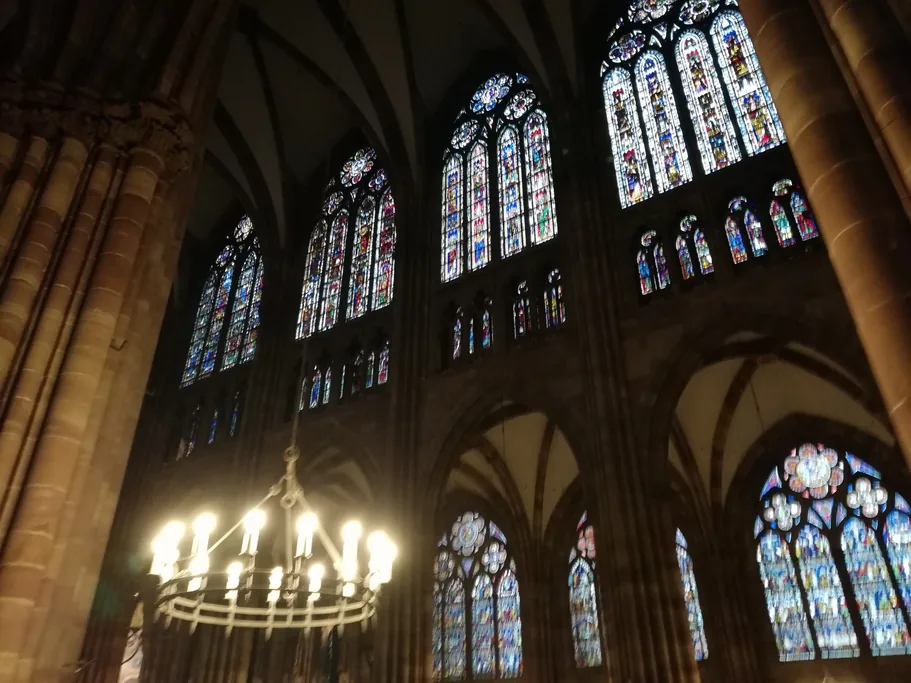
142 metres. From 1647 to 1874, for 227 years in a row, no building in the world was taller. The south tower was never built, which gives the cathedral its lopsided, instantly recognisable silhouette. The pink Vosges sandstone changes shade several times a day, and the huge rose window on the west front is comparable in size to a five-storey house.
Inside is the astronomical clock, which tracks the movements of the heavens and the date of Easter. During the show the apostles file past the figure of Christ and a mechanical rooster crows three times. The show doesn't run every day, and tickets aren't sold in advance. How to get in to see the clock and climb to the viewing platform is covered in detail in our guide to Strasbourg Cathedral.
A city shaped by both France and Germany
From 1262 Strasbourg was a free city of the Holy Roman Empire. Strasbourg came under the French crown in 1681. After the Franco-Prussian War of 1870–1871, it became part of the German Empire, before returning to France in 1918. In 1940 Nazi Germany effectively annexed Alsace, and Strasbourg was liberated on 23 November 1944.
After so many changes of rule the city could have lost its identity. Instead Strasbourg kept traces of both cultures, and you can taste that at the table as clearly as you can see it in the streets. Here they serve choucroute, sauerkraut braised in Riesling. And if you want something especially hearty, try baeckeoffe: meat and potatoes slow-cooked for hours in an earthenware pot. White wine is poured into glasses with green stems, and winstubs were once opened by winemakers themselves to sell their own wine. The local dishes are covered in detail in our guide to what to eat in Strasbourg.
The architecture tells the same story. East of the island, around Place de la République, begins the Neustadt, a district the German Empire built on such a scale that it would outshine everything French in the city. In the middle of the square stands a war memorial unveiled in 1936. A mother cradles her two dying sons: one fought for France, the other for Germany. The inscription names neither country.
Cathedral tickets you can't buy in advance
The cathedral's two highlights can't be booked ahead: tickets for both the clock show and the climb to the viewing platform are sold only on the spot. There is no official skip-the-line ticket for the platform, so if a third-party site promises one, check carefully what the offer actually includes.
There is a small saving to be had: the Strasbourg City Card costs €5 online and is valid for seven days. It is a discount card, not an entry ticket: it cuts the price of the viewing platform, the museums and a Batorama boat trip. And a guided tour or river cruise is easy to book online.
Petite France, and why its name is anything but romantic
Half-timbered houses from the 16th and 17th centuries, canals, open lofts under the roofs. Hides were dried in those lofts: tanners, millers and fishermen lived in the quarter, and all of them needed water. The name isn't about a charming little France either. At the end of the 15th century a hospice stood here for soldiers suffering from syphilis, which the Germans called "the French disease". The quarter is covered in detail in our guide to Petite France.
Next to it stand the Ponts Couverts and three squat towers, remains of the city's fortifications. There were once four. The bridges took their name from the wooden roofs they had in the Middle Ages. And from the terrace of the Barrage Vauban next door you get one of the best views of the city without paying €10 or climbing 330 steps: the terrace is free.
France's oldest Christmas market
The Christkindelsmärik Christmas market dates back to 1570, and it is largely the reason Strasbourg is called the Capital of Christmas. Today chalets fill squares all over the centre, the streets blaze with lights, and according to the city council Strasbourg's Christmas events drew 3.05 million visitors in 2025. It's easy to see why December is both one of the best and one of the most challenging times to visit Strasbourg.
In 2026 the Strasbourg Christmas market runs from 27 November to 24 December. Accommodation for those weeks goes fast, so it's best to book a hotel as soon as you know your dates.
Colmar, Germany and the Wine Route within easy reach
Strasbourg makes a handy base. Colmar is about 30 minutes away by train, and tickets are easy to buy online. West of Strasbourg, at Marlenheim, the Alsace Wine Route begins, some 170 km long. It heads south through wine villages such as Riquewihr and Kaysersberg. And tram D takes you across the Rhine to Kehl in Germany in a few minutes.
Strasbourg or Colmar? Colmar looks more like a postcard: a compact centre, brightly painted half-timbering and the canals of Little Venice. The Unterlinden Museum holds Grünewald's Isenheim Altarpiece. Colmar is much smaller than Strasbourg, though. It has no cathedral on the same scale, no German imperial quarter and no European institutions. On the other hand, you can explore its old town at a relaxed pace in half a day. That's why staying in Strasbourg and visiting Colmar on a day trip often makes sense. If you'd like to explore several wine villages without driving, an organised day trip is a convenient option.
What about compared with Paris? It's an unfair comparison, and the wrong question. Paris is built for a far longer and fuller programme. Strasbourg is more compact: you can see the main sights in one or two days, getting around almost entirely on foot. It's better added to a trip than chosen instead of Paris.
Who won't like Strasbourg
Let's be frank, since this usually goes unsaid.
- Anyone expecting a big city. Come for a week hoping for the variety of a capital, and you'll be bored by midweek.
- Anyone who dislikes uncertainty. The clock and the viewing platform can't be booked. Tickets have to be bought on the spot, and on summer weekends you can be stuck in the queue for a long time.
- Anyone coming mainly for major museums. There are strong collections of medieval art, painting and city history, but the museum scene is more modest than in Paris. Most museums close on Mondays, and the three museums in the Palais Rohan on Tuesdays. The Alsatian Museum, which shows how Alsatians actually lived, is closed for restoration until 1 June 2028.
- Anyone coming in December for peace and quiet. When millions of visitors descend on such a compact historic centre, the streets inevitably get crowded. It's worth seeing once, but you're unlikely to get much rest.
- Anyone counting on guaranteed sunshine. Cool, overcast days are common here, especially in late autumn and winter. Late spring and early autumn are usually more pleasant for long walks.
And one more trap: for twelve weeks a year the European Parliament holds plenary sessions in Strasbourg, and hotels fill up during those weeks.
Strasbourg with an audio guide
Almost nothing in Strasbourg explains itself. Take the "dancing plague" of 1518: not a single sign in the streets mentions it. People danced for days on end, and the city council tried to cure them with even more dancing. Stories like this are what the TouringBee audio tour is made of. It starts at the Pont Kuss, five minutes from the train station, runs through the whole historic centre and ends at St Paul's Church. You can start whenever you like and play each recording when you reach the spot.
- 33 stops, about 2.5 hours at your own pace, recordings of 1–3 minutes.
- From €9.99, one-time payment, one year of access, 8 languages.
- Download the tour in advance, and the map and recordings will work without an internet connection.
- The map shows where you are, making it easy to find the next stop.
Ready to explore Strasbourg?
Strasbourg is worth visiting for more than postcards of canals and half-timbering. Behind the pretty façades lies a far more complicated history: a spire that held the world height record for 227 years, an astronomical clock that pairs a Renaissance design with a 19th-century mechanism, and a memorial to a mother who lost sons on opposite sides of the border. What makes Strasbourg special is that you can see all of it on a single walk. Put the trip off if you want a capital city, if everything has to be booked in advance or if you expect December to be peaceful. Otherwise take two days and walk at an easy pace. And if you have a third, catch the half-hour train to Colmar in the morning.
Frequently asked questions
Is Strasbourg worth visiting?
Yes, even for a day, though two is better. The cathedral was the tallest building in the world for 227 years, yet you can cross the UNESCO-listed historic centre on foot in just 15–20 minutes. Strasbourg's border history is also visible everywhere, from its architecture to its food. For most first-time visitors, a week in Strasbourg itself would be more than they need.
What is Strasbourg famous for?
Its cathedral and astronomical clock, the Petite France quarter and France's oldest Christmas market. Strasbourg is also known for Alsatian food and wine. And it is one of the three capitals of the European Union.
Strasbourg or Colmar: which should I choose?
Strasbourg, with Colmar added as a day trip. Colmar is more compact and more picture-postcard, but much smaller. The train takes about 30 minutes.
How many days do I need in Strasbourg?
One day for the centre, if you plan it around the 12:30 clock show. Two for the city itself, three with Colmar, the Wine Route or the European Parliament.
Can I buy tickets for the clock or the viewing platform in advance?
No. Both are sold only on the spot, on the day of your visit.
Keep reading
- Strasbourg travel guide — the essentials about the city
- One day in Strasbourg — an hour-by-hour route if time is short
- Things to do in Strasbourg — 16 ideas for your trip
- Strasbourg Old Town — the Grande Île on foot
- Strasbourg walking tour — a self-guided route

Eugene has lived in France for 16 years and worked as a tour guide before founding the travel-content network paris10.travel. He wrote the TouringBee audio tour of Strasbourg.
Every price and opening time on this page is checked against the official source for the current year. Where a fact is not yet published, we say so instead of guessing.
TouringBee audio tours are our own product. Links to GetYourGuide, Booking.com and SNCF Connect are affiliate links. If you book through them, we may earn a small commission at no extra cost to you. These partnerships never influence our recommendations.