How many days to spend in Strasbourg depends not only on the list of sights but also on when they are open. That matters most if you want to visit museums, see the astronomical clock show or go to the European Parliament. Most city museums are closed on Mondays. The cathedral nave closes in the middle of the day for the clock show. The Alsatian Museum, which still appears in itineraries online, is closed until 1 June 2028. And the European Parliament is closed on Sundays and won't let you in without an original ID document. If you don't check opening times in advance, you can end up in front of locked doors and spend part of your trip rearranging plans.
Strasbourg Self-Guided Audio Tour Instant access
It isn't only a matter of hours, though. You can wander the Grande Île with no plan at all, admiring the houses above the water and the narrow lanes. But then it's easy to walk past the stories that make Strasbourg special. If time is short, it's worth choosing a route in advance and taking the TouringBee audio tour with you: that way you see more in a single day and don't miss the best parts.
At a glance
| Key facts | |
|---|---|
| Grande Île | About a kilometre across, 15–20 minutes end to end on foot |
| The answer | 1 day for the centre, 2 for the city, 3 with Colmar or the Wine Route |
| City museums | €9 per museum, most closed on Mondays, the Palais Rohan museums on Tuesdays |
| Cathedral nave | Free, Monday to Saturday break 11:15–12:45, Sunday 14:00–17:15 only |
| From Paris | Direct high-speed train, the fastest takes 1 h 45 min |
| Best days for a museum trip | Wednesday to Friday |
Half a day: what you can see between trains
Petite France is about ten minutes' walk from the station, which makes Strasbourg a good stopover on a longer journey. With three or four hours between trains, you can leave your bag in luggage storage and walk along the Grand'Rue, laid out on an old Roman road. From there, continue through Petite France towards the Ponts Couverts and the free terrace of the Barrage Vauban, where you'll find one of the best views of Strasbourg. After that, head along Rue Mercière, where the cathedral façade fills the whole gap at the end of the street.
Even a walk this short gives you a first impression of the city. But you probably won't have time for the climb to the viewing platform, the astronomical clock show, the museums or a boat trip. So if Strasbourg is just a stop between trains, don't try to squeeze everything into a few hours. If you have time left after your walk and the cathedral is open, be sure to step inside. The climb, the museums and the river cruise are better saved for your next visit.
One day: enough to say you've seen Strasbourg
One day is enough to get a good feel for the historic island, where many of Strasbourg's best-known sights are concentrated.
The cathedral sets the schedule. Entry to the nave is free, but in the middle of the day it closes for the astronomical clock show at 12:30. Tickets for the show are sold on the day only, and there is no show on Sundays or during the Christmas market. If you want to see both the clock and the view from the platform, allow several hours for the cathedral and plan the rest of your walks around the show. The climb is worth it: for more than two centuries, no building in the world was taller than Strasbourg Cathedral. If time is short, keep to the nave and the façade. How visits work is covered in detail in our guide to Strasbourg Cathedral.
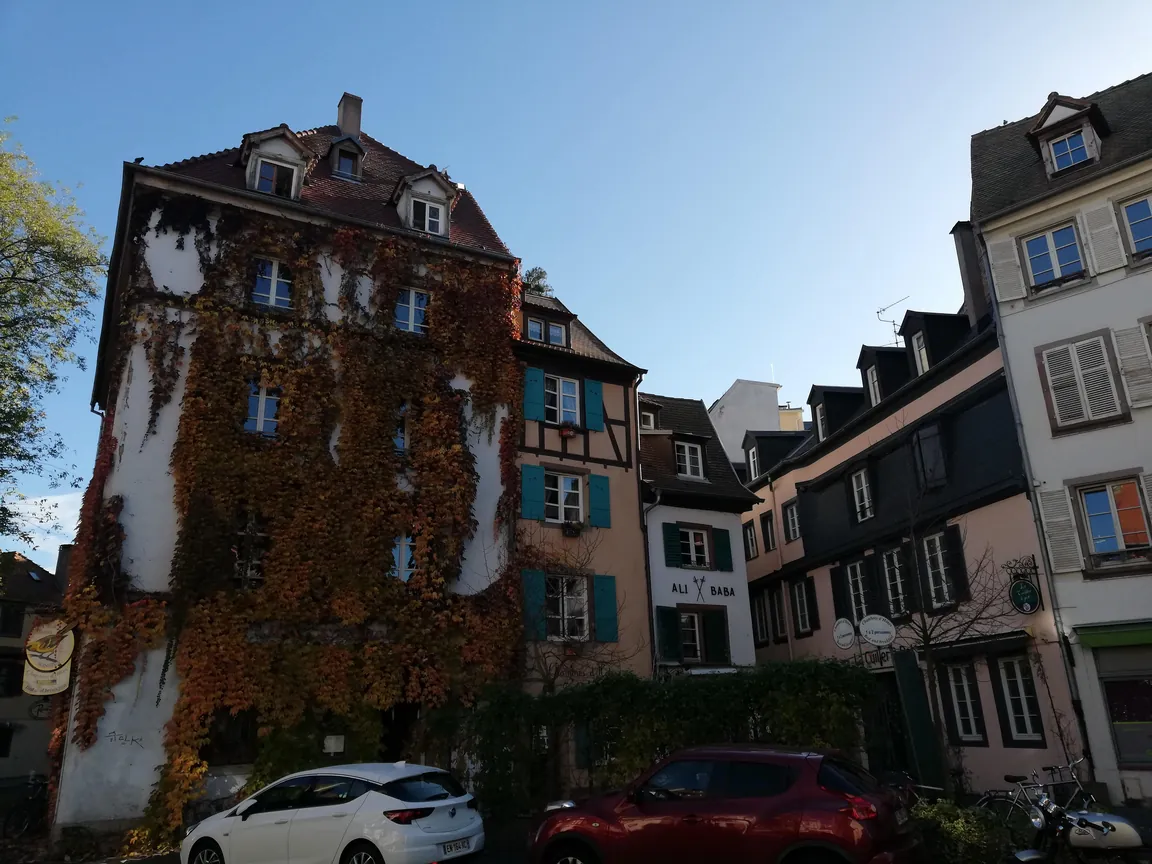
After the cathedral you can take your time over the rest of the island. Stroll through Petite France, where old half-timbered houses stand right above the canals, and walk on to the Ponts Couverts. Their roofs are long gone, but the medieval name has stuck. Then head back towards Place Gutenberg and stop at a winstub for lunch on the way. Try baeckeoffe, a hearty Alsatian dish of meat and potatoes.
To avoid wasting time finding your way, you can follow the plan in One day in Strasbourg. It's laid out hour by hour and fits well with the route of the TouringBee audio tour.
Two days: the best option for most people
The second day is what finally lets you stop rushing. You already know the cathedral and Petite France, so now you can see another side of Strasbourg: visit a museum, walk through the Neustadt and see the city from the water.
There's no need to fit everything into one day. If you love museums, pick a couple and the Neustadt. If you'd rather walk more and relax, keep to one museum and take a boat trip after lunch.
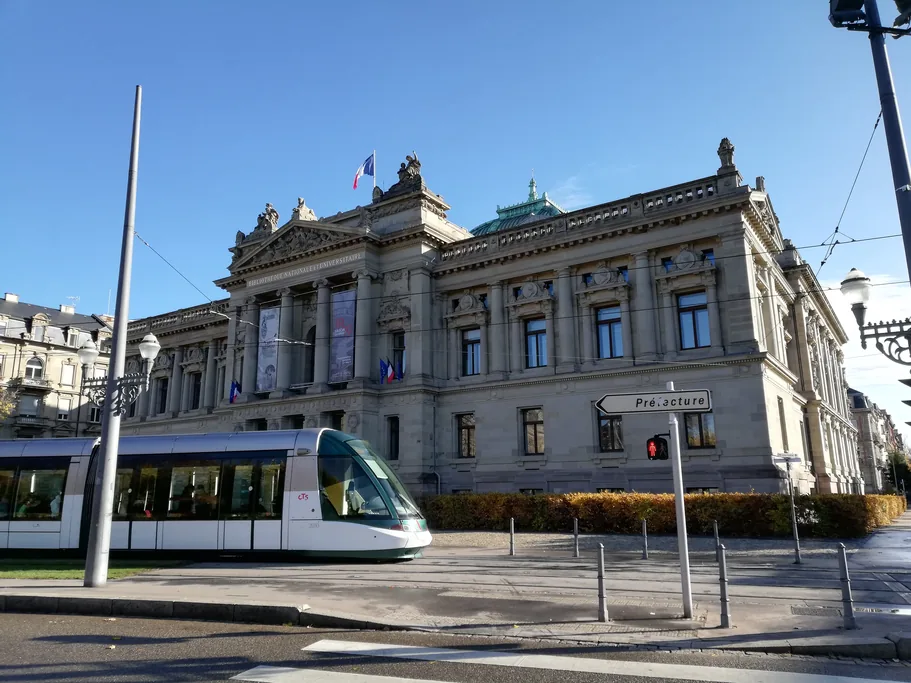
- The Neustadt. The German imperial quarter, built after 1871 to outdo everything French. Here are Place de la République, the Palais du Rhin and the university library. Its broad boulevards and imposing buildings are a striking contrast to the narrow streets of the medieval centre. It's ten minutes from the cathedral, and there are hardly any tourists.
- Museums. On day two, choose one or two museums that match your interests. The Museum of Fine Arts is in the Palais Rohan, which houses two more museums with separate tickets. In the Historical Museum, don't miss the 18th-century relief model of Strasbourg: it shows how the old city fits together. If you want to give museums most of the day, compare single and combined tickets in advance.
- A boat trip. The cruise on the Ill takes just over an hour, passes through the locks near Petite France and continues towards the European Quarter. Tickets are sold for specific departures, so it's worth choosing your time in advance, especially in the busy season. You can also book a river cruise online.
- An evening at your own pace. There's no need to hurry: drop into a winstub, order a Riesling in a traditional Alsatian glass with a green stem, and stroll along the canals in the sunset light.
Three days: Alsace or Europe
With a third day, you have more freedom to explore. You can go to fairy-tale Colmar, explore the wine villages of Alsace or stay in Strasbourg and finally make it to the European Quarter. It all depends on what interests you most.
Colmar
Colmar is about 30 minutes away by train. It has a medieval centre that survived almost intact and the Unterlinden Museum with Grünewald's Isenheim Altarpiece. The altarpiece was made for the hospital of the Antonite monks, who cared for the sick, including people suffering from ergot poisoning.
The Wine Route
The road, about 170 km long, runs through villages such as Riquewihr and Kaysersberg. In Alsace wine is often named after the grape variety, which makes tasting rooms easy to navigate. Some wine villages can be reached by train or bus, but visiting several in one day takes more planning. Hiring a car gives you flexibility, while an organised day trip is a convenient alternative if you'd rather not drive.
The European Quarter
If you'd rather stay in Strasbourg, spend part of the third day at the European Parliament, then walk around the area and the Parc de l'Orangerie. Entry to the Parliament is free, and the complex is more striking than you might expect: a huge building with a glass cylinder deliberately left looking unfinished. Outside plenary sessions, individual visitors can usually come without booking, and it's closed on Sundays. During sessions you need to register in advance to watch a debate, and the rules for self-guided visits depend on the day and time. Bring your original passport or national ID card: copies, photos on your phone and driving licences aren't accepted at the entrance.
A small saving across all three days: the Strasbourg City Card costs €5 online and is valid for seven consecutive days. It's a discount card for the viewing platform, the museums and the boat trip. Whether it pays off depends on your plans. If you're planning several paid visits, compare the total discount with the price of the card.
Four days or more: when it makes sense
Four days in Strasbourg itself is more than most people need. But if you're coming in December and want to do more than see the market, perhaps exploring the surrounding area too, the extra time will come in handy. Another reason to stay longer is to use Strasbourg as a base for trips around Alsace and neighbouring Germany.
December. Strasbourg's Christmas market is the oldest in France, with a history going back to 1570. In 2026 it runs from 27 November to 24 December. The festive squares are spread across the whole centre, so one evening may not be enough, especially if you want to wander without rushing. How it all works and what stands where is covered in our guide to the Strasbourg Christmas market.
Strasbourg as a base. For a city of its size, Strasbourg has surprisingly good rail links: Basel is about an hour and a quarter away, Stuttgart from an hour and a half, Frankfurt from two hours. And tram D runs straight to Kehl in Germany with no changes. If you'd like a calmer day, head to the Parc de l'Orangerie, home to Alsace's famous storks. That way you won't have to fill your extra days with sights for the sake of it.
Which day of the week to arrive
- Monday is awkward for a museum trip: most city museums are closed. Most city museums are open on Sundays, but the cathedral keeps different hours and there's no clock show. So it's best to plan these two days differently.
- Wednesday to Friday works best for museums. Even then, check the opening times of the museum you want: the Palais Rohan museums close on Tuesdays, and on public holidays they may all be shut.
- On the first Sunday of the month, city museums are free for everyone. If your dates are flexible, it's the best day for museums, so leave the cathedral for the afternoon.
- Check the European Parliament calendar. Plenary sessions take place here for twelve weeks a year, and hotels fill up during those weeks. The late-2026 plenary sessions are scheduled for 23–26 November and 14–17 December. Before choosing your dates, check hotels in Strasbourg for those weeks.
Strasbourg with an audio guide
The TouringBee audio tour starts at the Pont Kuss, five minutes from the train station, runs through the whole historic centre and ends at St Paul's Church. That makes it a good fit for a one-day trip, and if you have more days, it's easy to break off the walk and carry on the next day: access lasts a year.
- 33 stops, about 2.5 hours at your own pace, recordings of 1–3 minutes.
- From €9.99, one-time payment, one year of access, 8 languages.
- Download the tour in advance, and the map and recordings will work without an internet connection.
- The map shows where you are. Recordings don't start on their own: you play each one when you reach the stop.
Ready to explore Strasbourg?
In Strasbourg what matters is not so much the number of days as what you want to see in that time. One day gives you a taste of the historic centre and plenty to remember. With two days, you can discover Strasbourg's German imperial quarter, explore a museum and see the canals from the water. A third day lets you head out into Alsace or stay in the city and take your time over the European Quarter. Even a short trip can be full if you plan your route in advance. It's far more frustrating to arrive at a closed museum or reach the cathedral right in the middle of its visiting break. So check opening times before you buy your train tickets, and the European Parliament calendar before you book a hotel.
Frequently asked questions
How many days do you need in Strasbourg?
One full day for the Grande Île: the cathedral, Petite France, the Ponts Couverts and the main squares. Two days is the best option, adding the Neustadt, a museum or two and a boat trip. Three days let you visit Colmar, the Wine Route or the European Quarter.
Is one day enough?
For the historic island, yes. It's about a kilometre across, and the cathedral, Petite France, the Ponts Couverts and the Barrage Vauban terrace all fit into one day on foot. There won't be much time left for museums, and a trip out of town is better saved for another day.
Is Strasbourg good for a weekend?
Two days is the most common option, and it suits the city best. For a trip with museums, Friday and Saturday usually work well. But check the opening times of specific museums in advance, especially around public holidays.
Which day of the week should I avoid?
If you plan to visit museums, Monday: most city museums are closed. Most city museums are open on Sundays, but the cathedral has different visiting hours and there's no clock show. Both days are fine for a walk around the centre.
Can I combine Strasbourg and Colmar?
Yes. Colmar is about 30 minutes away by train and fits nicely into a third day. Give it the whole day: the Unterlinden Museum alone takes a couple of hours.
How many days should I spend in Strasbourg for the Christmas market?
In one evening you can see the main festive squares, but without lingering. Two days let you enjoy the market at a relaxed pace and get to know the city. A third is useful if you'd like to continue around Alsace. In 2026 the market runs from 27 November to 24 December.
Keep reading
- Strasbourg travel guide — the essentials about the city
- One day in Strasbourg — an hour-by-hour route around the 12:30 show
- Strasbourg walking tour — a self-guided route through the centre
- Things to do in Strasbourg — 16 ideas for your trip
- Strasbourg in winter — the weather and what to do in the cold season

Eugene has lived in France for 16 years and worked as a tour guide before founding the travel-content network paris10.travel. He wrote the TouringBee audio tour of Strasbourg.
Every price and opening time on this page is checked against the official source for the current year. Where a fact is not yet published, we say so instead of guessing.
TouringBee audio tours are our own product. Links to GetYourGuide, Booking.com and SNCF Connect are affiliate links. If you book through them, we may earn a small commission at no extra cost to you. These partnerships never influence our recommendations.